Kategorie: Blog

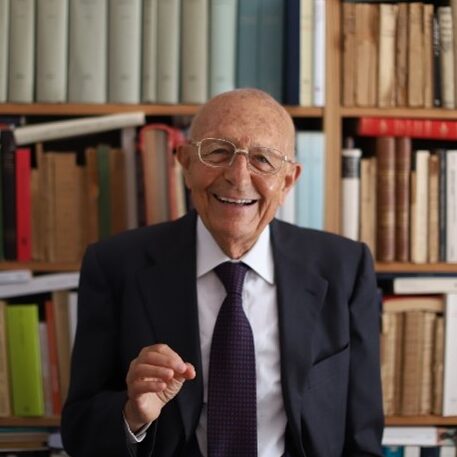
Being a Trespasser

Disciplinary Entanglements, Collective Reflections

One of the major developments of public law scholarship in the last half century has been the enlargement of the study of public law, from studying the law to studying also the various approaches to the law and their changes over time.

This is a process of self-consciousness comparable to the revolution produced by the publication, in the second half of the Sixteenth century, of the “Essais” by Michel de Montaigne, because now lawyers study not only law, but also legal scholarship (that is how lawyers study law). This development has introduced a new canon in the legal culture.

For this reason, a collective reflection on the history of the Max Planck Institute for Comparative Public Law and International Law is particularly important and useful, if we succeed in situating this reflection in the larger  framework of the history of legal thought in the area of public law.

Disciplinary entanglements among public international law, European public law, and comparative public law (but also between public law and private law) progress in time as the product of a double development, one at the level of the legal change, the other in the scholarly dimension. The first is the erosion of state power, the second the crisis of the positivistic approach to science and to legal scholarship. Both phenomena have prompted a set of transformative developments in the field of public law.

Five new Developments

A first development is the blurring of the frontiers between the national dimension of the law and the foreign and supranational dimension. As in the XVI and XVII centuries national European courts, the “lex alius loci” (the law of another country) becomes relevant[1].

Article 6(3) TEU provides that: “[f]undamental rights, as guaranteed by the European Convention for the Protection of Human Rights and Fundamental Freedoms and as they result from the constitutional traditions common to the Member States, shall constitute general principles of the Union’s law.”[2] A similar clause is found in the Treaty on the Functioning of the European Union (TFEU), Article 340. The reference to the legal orders of the Member States of the European Union as sources of Union law is reiterated in the Charter of Fundamental Rights of the European Union, albeit with different wording (first “principles” and later “traditions”: Article 41(3) and Article 52(4)).

These provisions introduce an entirely new manner of lawmaking. The first is that the higher law is made up of the lower law, through a process of absorption. Therefore, in the area of fundamental rights, the “general principles” of European law are the result of a complex “two-way” process, because they first proceed from the bottom up, and then from the top down. The higher law can derive from lower law; the “general principles” do not drop down from the top. This process launches a “dialogue” between the two levels of government, and is proof of their reciprocal openness. “The inclusion of Member States’ law in the concept of European law” produces a “European conglomerate of legal norms of different legal orders”[3].

The second peculiarity is that this vertical two-way procedure also requires a horizontal, comparative process, because the commonalities must be discovered through a comparison of traditions. Comparison becomes a part of the norm-setting procedure. However, at the same time, this use of comparison has an impact on the identity of this branch of legal scholarship, which thus becomes an instrument to develop concepts and institutions that transcend individual national legal orders. Comparative law replaces legal comparison and to some extent can be considered as binding law[4].

A second development is the blurring of the borders between public and private law. To overcome the different national approaches to the public/private law divide, European law has introduced the notion of “body governed by public law” “established for the specific purpose of meeting needs in the general interest, not having any industrial or commercial character”[5]. This new notion crosses the public/private  law divide, is based on substantial and not formal elements, goes beyond the national dividing lines of private and public law.

A third development is the rediscovery of the role of legal scholarship as a major element of the legal order: culture and epistemic communities become a part of the study of law as they have an impact on the legal order through system building and interpretation. Therefore, it is vital to study the historical developments of legal scholarship as a part of the legal systems at the national and at the supranational level, taking into account the divergent legal approaches and crossing borders between States, disciplines and the public and private divide.

A fourth development is the overcoming of the traditional border between the legal space and the non legal (political, social) dimension. Thanks to this development, it becomes possible to study and understand the reciprocal influences of scientific management and Taylorism, on  one side, and the regulation of administrative procedure by judges and legislators, on another side. This convergence of learning overcomes fragmentation of science and encourages integration of points of view and cultures that were separated: the life of law is not only norms and judgments, not only legal orders and systems, not only legal concepts, but also history, culture, “mentalité”, and our task is to reassemble what has been divided in the last two centuries.

A fifth development is the recognition that foreign, transnational, supranational, and global law are not only an object of scientific analysis by national scholars belonging to a different legal system, but also “goods” or “merchandises” imported from the outside into a different legal order, that have effect due to their normative or quasi–normative role both in the original system and in the importing country. This is because legal systems are open or porous (treaties and agreements abolish barriers to money transfers and to trade; and money and trade are instrumental to the transplant of legal institutions); there are some characteristics, institutions, procedures, rules, practices, common to more than one national legal system; legislators get “inspiration” from comparison, and, therefore, they have to adjust national legal systems to the prevailing institutions in the most developed nations; national courts, for their part, establish links with foreign legal orders via comparison; legal scholarship is not bound to a nationalistic approach, and comparative law experts may not only study, but also suggest or advise, on the basis of comparison; comparison is not a pure intellectual effort to know each other; it assumes a practical function; as a consequence, legal scholarship can proceed from legal comparison (“Rechtsvergleichung”) to true comparative law; comparative lawyers establish a transnational legal discourse and act as “merchants of law”; finally, comparison becomes a “source of law”, with donor countries and receptor countries (that in some cases improve the model and become donors for other countries)[6].

Looking to the Future

Due to these developments, public law has changed and is changing. Three important aspects of this change are: the overcoming of the national limitation of law, the transdisciplinary opening of the splendid isolation of the legal method, and the modifications of the grammar of law (and its traditional conceptual grounding in Roman law).

Today’s imperative is to abandon exclusive legal nationalism. This does not mean not cultivating national law, but recognizing its necessary interdependence with other national laws, regional legal orders, and universal principles.

The second imperative is to build bridges between law, the “humanities” and the “social sciences”, because law is a social science. This does not mean to abandon the “legal method”, but to integrate it with other disciplines.

The third imperative is the construction of a more comprehensive language and grammar. The vehicular language is now English, spoken by a billion and a half inhabitants of the earth. The grammar is that developed by the various branches of the science of law almost everywhere in the world.

In its centennial history, the Max Planck Institute for Comparative Public Law and International Law has become an innovative and attractive forum and center of the world’s epistemic community in public law. The combination of open-mindedness, richness of seminars and discussion, efficiency, and continuity attracts the best scholars in the field, junior and senior, a combination that has produced some of the best comparative pieces in the field of public and international law.

One can only hope that the Institute will continue along its well established traditions. One can expect and hope that in the future it will also combine researches on the State with the study of non-State actors and indirect rule, and match the study of legal doctrine and theory with a problem-oriented approach, open to non-legal methodologies.

As side by side to the State-pyramid have developed the State-network, and recently the State-archipelago, while the borders between internal and external public law become blurred, and the State is flanked by non-State supranational and global actors, attention must be given also to these new bodies.

Legal institutions and processes do not live in a vacuum, their study cannot proceed without taking into account political, sociological, cultural aspects. Therefore, while being using the tools of the trade, possessing full mastery of the legal techniques, perfect command of the principles, lawyers assembling at the Institute should also strive for a more open study of law.

 My final conclusion is an invitation: cross borders, be a trespasser, go “beyond the State, beyond the West, beyond the law”[7]!

A comprehensive version of this article will be published in the Zeitschrift für ausländisches öffentliches Recht und Völkerrecht.


[1] Gino Gorla, I tribunali supremi degli Stati italiani, fra i secoli XVI e XIX, quali fattori di unificazione del diritto nello Stato e della sua uniformazione fra Stati, in: Bruno Paradisi (ed.), La formazione storica del diritto moderno in Europa, Firenze: Olschki 1977, 447 ff.

[2] On the origins of the general principles of EC law, see Paul Craig, UK, EU and Global Administrative Law. Challenges and Foundations, Cambridge: Cambridge University Press 2015, 323.

[3] Armin von Bogdandy, The Current Situation of European Jurisprudence in the light of Schmitt’s Homonymous Textunpublished paper, 15.

[4] I have developed these points in: Sabino Cassese, Ruling from below: common constitutional traditions and their role, N.Y.U. Environmental Law Journal 39 (2021), 591-618. On the methodologies of comparison, see Ran Hirschl, Comparative Methodologies, in: Roger Masterman/Robert Schütze (eds), The Cambridge Companion to Comparative Constitutional Law, Cambridge: Cambridge University Press 2019, 11 ff.

[5] Art. 1 directive 18 of 2004; see also CJEU, Gemeente Arnhem and Gemeente Rheden v BFI Holding BV, Judgement of 10 November 1998, case no. C-360/96, ECLI:EU:C:1998:525.

[6] I have made these points in: Sabino Cassese, Beyond Legal Comparison, in: Annuario di diritto comparato e di studi legislative, Napoli: Edizioni Scientifiche Italiane 2012, 387-395.

[7] This is a synthesis made by Tommaso Amico di Meane, Sulle spalle dei giganti? La questione metodologica del diritto comparato e il suo racconto, Napoli: Editoriale scientifica 2022, 336.

Suggested Citation:

Sabino Cassese, Being a Trespasser, MPIL100.de, DOI: 10.17176/20240219-171434-0
Lizenz: CC BY-NC-SA 4.0 DEED


Der Weg in die Europäische Union

Accession to the European Union

Deutsch

Ein zeitloses Gutachten Hermann Moslers

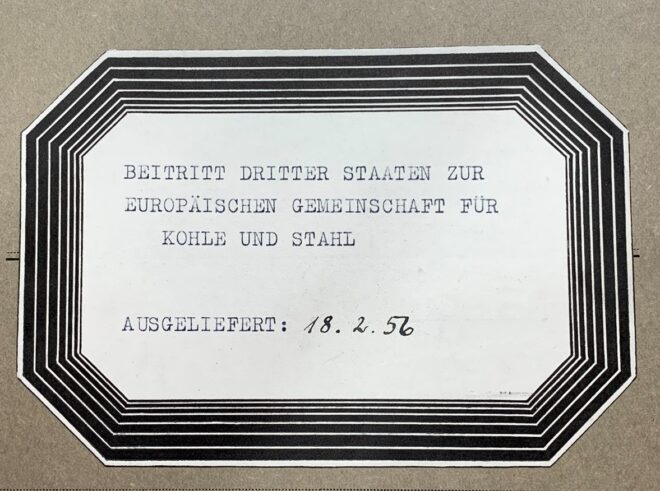
Am 4. Oktober 1955 wandte sich Frits de Nerée tot Babberich an MPIL-Direktor Hermann Mosler mit einer Anfrage um ein Gutachten. Der Generalsekretär der Gemeinsamen Versammlung der Europäischen Gemeinschaft für Kohle und Stahl (EGKS), Vorgängerin des Europäischen Parlamentes, war von dessen Ausschuss für politische Angelegenheiten und Außenbeziehungen beauftragt worden, Materialien zu der Fragestellung des Beitritts dritter Staaten zur EGKS zu sammeln.

Die Montanunion steht für Deutschlands Reintegration in die europäische Ordnung nach dem Zweiten Weltkrieg. Das Gutachten zum Beitritt dritter Staaten zur EGKS ist von ähnlicher Bedeutung für die europäische Integration des Max-Planck-Instituts für ausländisches öffentliches Recht und Völkerrecht. Gutachten des Instituts waren seit dessen Neugründung 1949 vor allem durch deutsche Ministerien angefragt worden. 1955 aber gingen gleich zwei Anfragen von Seiten der Montanunion ein. Diese Gutachten sind Ausdruck der Öffnung des Instituts jenseits deutscher Grenzen.

Diese Öffnung ist eng verbunden mit der Person Hermann Moslers. Das ist kein Zufall. Der 1955 43 Jahre alte deutsche Völkerrechtler war in den Anfangsjahren des Auswärtigen Amtes zuständig für die Rechtsabteilung und in dieser Funktion eingebunden in die Ausarbeitung des Schuman-Plans.[1] Von 1954 an führte Hermann Mosler das Max-Planck-Institut 26 Jahre und war entscheidend für den neuen Fokus der Forschungseinrichtung.[2] Bis Kriegsende war im Institut das Völkerrecht vor allem zur Beantwortung von Fragen herangezogen worden, die Deutschland betrafen. Mit Mosler weitete sich der Blick auf internationale Organisationen, internationale Beziehungen und die sich entwickelnde europäische Integration.

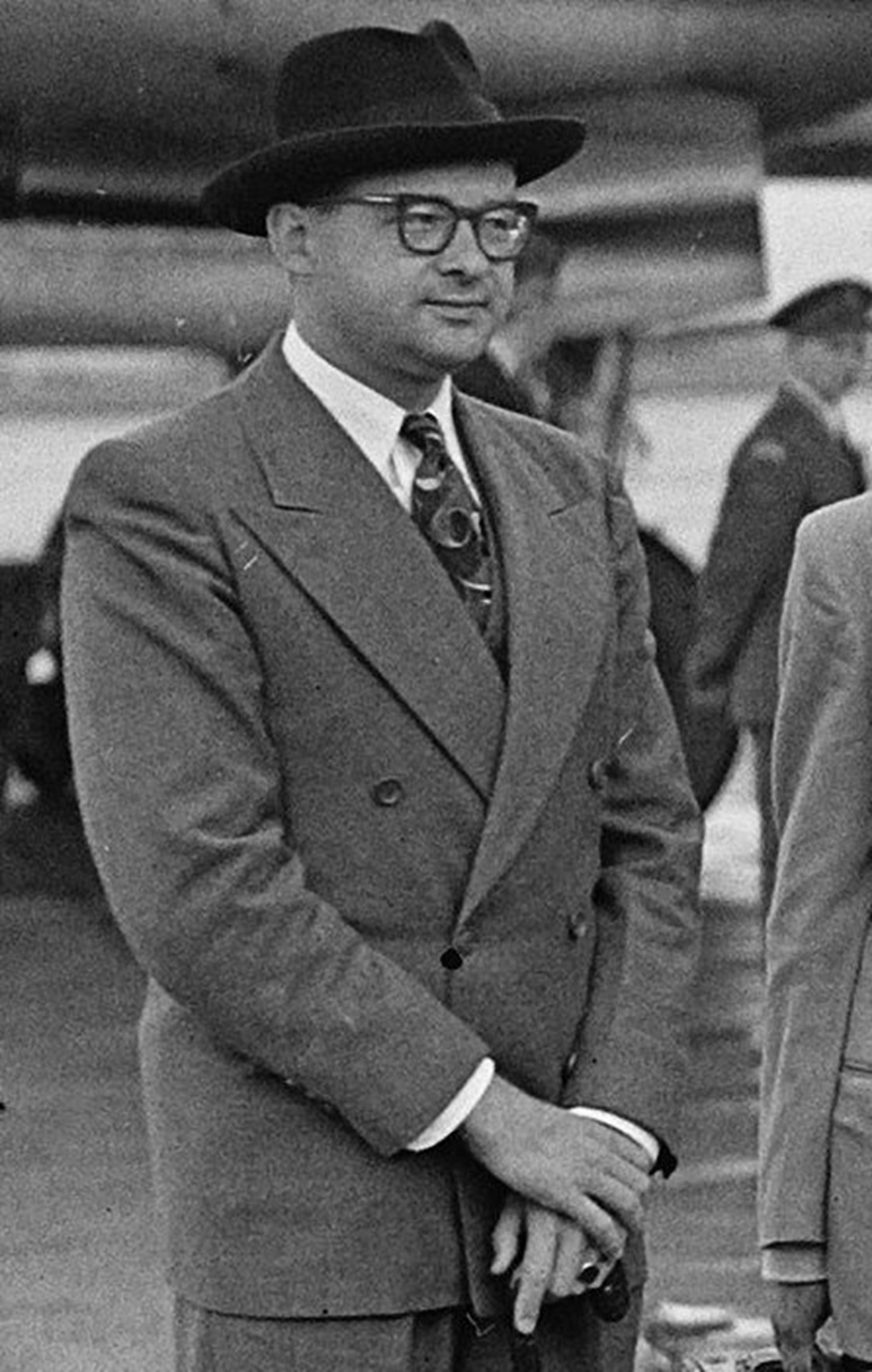
Dass Mosler auf internationalem Parkett als unbelasteter Verhandlungspartner wahrgenommen wurde, kann auch durch die persönliche Geschichte de Nerées verdeutlicht werden. Zwischen 1942 und 1944 war der Politiker von den deutschen Besatzern als eine von 1400 niederländischen Geiseln im Lager St. Michielsgestel als Faustpfand zur Verhinderung von Attentaten durch Widerstandsbewegungen gefangen gehalten worden.[3] Trotz dieser einschneidenden Erfahrung wandte sich der Niederländer 1955 an den prominenten deutschen Völkerrechtler, nicht um den deutschen Standpunkt abzufragen, sondern um ein europäisches Gutachten zu erhalten zu einer zeitlos aktuellen Frage.

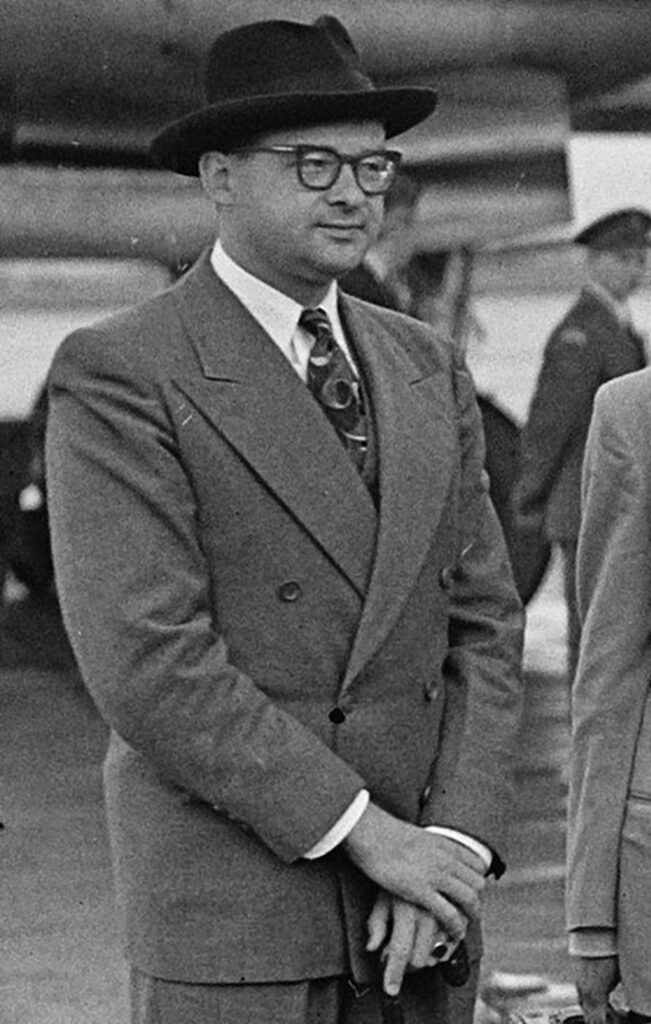
De Nerée 1950 in Amsterdam[4]

Denn Erweiterung ist fast 70 Jahre später weiterhin ein Thema. Immer noch wollen Staaten der Europäischen Union beitreten. Geändert hat sich allerdings die Haltung der Mitgliedstaaten. In den Anfängen wurde die Offenheit der Gemeinschaft unterstrichen, worauf sowohl Mosler im Gutachten als auch de Nerée im Schriftverkehr hinweisen, um die Angst vor der „Bildung eines wirtschaftlichen Machtblocks zu zerstreuen“ (S. 6 des Gutachten Moslers; alle weiteren Seitenangaben beziehen sich auf das Gutachten). Heute bestimmen die Grenzen der Erweiterung und neue Beitrittsbedingungen die Diskussion. So sieht Art 49 EUV, der den Beitritt zur EU regelt, mittlerweile auch politische Kriterien vor für einen Beitritt. Als de Nerée das Beitritts-Gutachten bei Mosler anfragte, waren die Fragen noch viel allgemeiner: Wie sollte die wirtschaftliche Eingliederung neuer Mitgliedstaaten in die Montanunion erfolgen? Wie ein Beitritt in eine so stark integrierte Gemeinschaft, wie es die Montanunion für damalige Verhältnisse bereits 1955 war? Ähnlich offen war auch die Frage, mit der sich der Gutachter konfrontiert sah: Muss, und wenn ja inwiefern, der EGKS-Vertrag abgeändert werden, um den Beitritt dritter Staaten zur Montanunion zu ermöglichen?

Der zu dem Gutachten überlieferte Schriftverkehr zeigt, dass Hermann Mosler sich zunächst darauf konzentrierte, die Frage zu präzisieren. Dafür nahm er Kontakt zu Marga Klompé auf. Die Niederländerin war eine wichtige Ansprechpartnerin, gehörte sie als als Berichterstatterin dem Ausschuss an, der Generalsekretär de Nerée gebeten hatte, Materialien zu der Beitrittsfrage zusammenzustellen. Marga Klompé, wie ihr Landsmann aus der Grenzregion zu Deutschland stammend, wurde später die erste Ministerin in den Niederlanden. Sie war zudem das erste weibliche Mitglied der Gemeinsamen Versammlung der EGKS.[5]

Marga Klompé (1956)[6]

Der Austausch zwischen Gutachter und Ausschussberichterstatterin führte zur Präzisierung der Frage, ob unterschieden werden müsse zwischen dem Beitritt eines Staates mit Kohle- und Stahlproduktion wie etwa Österreich, oder ohne, wie etwa Dänemark. Da diese Präzisierung noch einiges offenließ, nahm Mosler selbst eine Unterteilung seines Gutachtens in mehrere Unterfragen vor. In einem ersten Schritt erläutert er die Frage, wie ein Beitritt abläuft und damit die rechtliche Bedeutung der Vorgaben zum Beitritt in Art 98 EGKS und den dort vorgesehenen Zuständigkeiten der Organe (S. 5 ff.). In einem weiteren Schritt widmet er sich der Frage der Wirkung des Beitritts auf die Organe. Er prüft, ob im Vertrag Anpassungen vorgenommen werden müssen, da dieser die Besetzung der Organe auf die konkreten Mitglieder zuschneidet. Mosler diskutiert in diesem Zusammenhang die Fragen nach Gleichgewicht und Besetzung von Hoher Behörde, Beratendem Ausschuss (heute Europäischer Wirtschafts- und Sozialausschuss), Rat und Gemeinsamer Versammlung der Gemeinschaft (S. 35 ff.). Der letzte Teil seines Gutachtens beschäftigt sich mit Fragen der Übergangsfristen für den Beitritt, insbesondere mit Blick auf Marktbeitritt, der Anpassungszeiten erforderlich mache (S. 71 ff.).

Auf dem Weg in eine neue Rechtsordnung

Die Argumente, die Hermann Mosler im Gutachten heranzieht, beruhen hauptsächlich auf dem Völkerrecht. Er diskutiert eine analoge Anwendung von Verfahren aus völkerrechtlichen Verträgen. Die Übertragbarkeit von Mechanismen aus anderen Abkommen auf die EU wirkt heute befremdlich. Doch das Gutachten entsteht 1955, also noch vor dem großen nächsten Integrationsschritt, den Römischen Verträgen. Erst diese veranlassen den Europäischen Gerichtshof in seinem Van Gend en Loos-Urteil festzustellen, dass „die Gemeinschaft eine neue Rechtsordnung des Völkerrechts darstellt“.[7] Erst damit beginnt die sui generis-Debatte, der zufolge die Europäische(n) Gemeinschaft(en) etwas ganz Neues darstellen, das nicht nach völkerrechtlichen, sondern eigenen Maßstäben zu beurteilen ist. Heute ist es selbstverständlich, dass zur Auslegung der Verträge EU-Recht mit der entsprechenden vom EuGH entwickelten Methodologie angewandt wird. Dieses Gutachten erinnert daran, dass dies nicht immer so war und eine derartige Entwicklung für die Akteure damals nicht absehbar war. Nicht umsonst gilt das Van Gend en Loos-Urteil als revolutionär. Nichtsdestotrotz ergibt sich schon aus Moslers völkerrechtlich geprägten Überlegungen, dass die Gemeinschaft bereits 1955 so stark integriert war und viel stärker in die Souveränitätsrechte der Mitglieder eingriff als andere völkerrechtliche Verträge, dass Mosler oft keine Parallelen zu anderen Verträgen ziehen konnte und daher eher Abgrenzungen von bestehen Verträgen rechtfertigte. So stellt er im ersten Teil des Gutachtens klar, dass anders als bei UN-Konventionen ein Beitritt durch einfache Notifikation nicht möglich ist (S. 6) und erklärt an anderer Stelle, warum eine Anwendung der Mechanismen des GATT nicht auf die Gemeinschaft übertragbar sei.

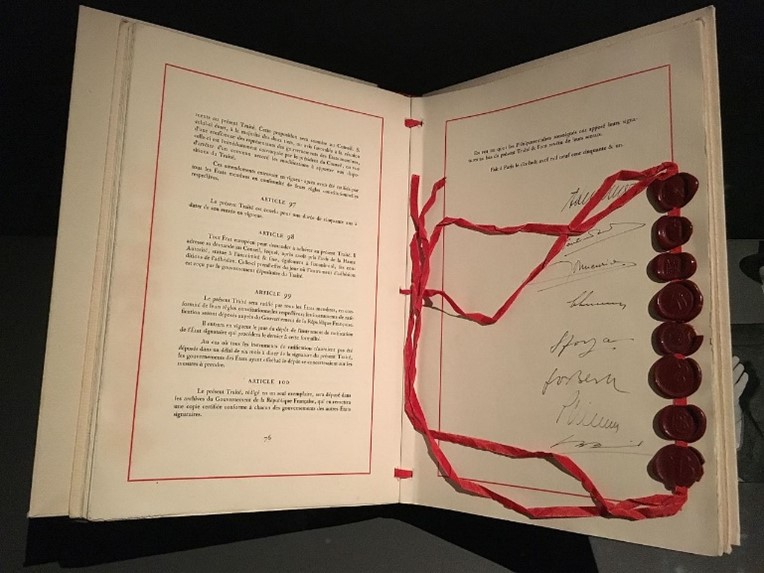
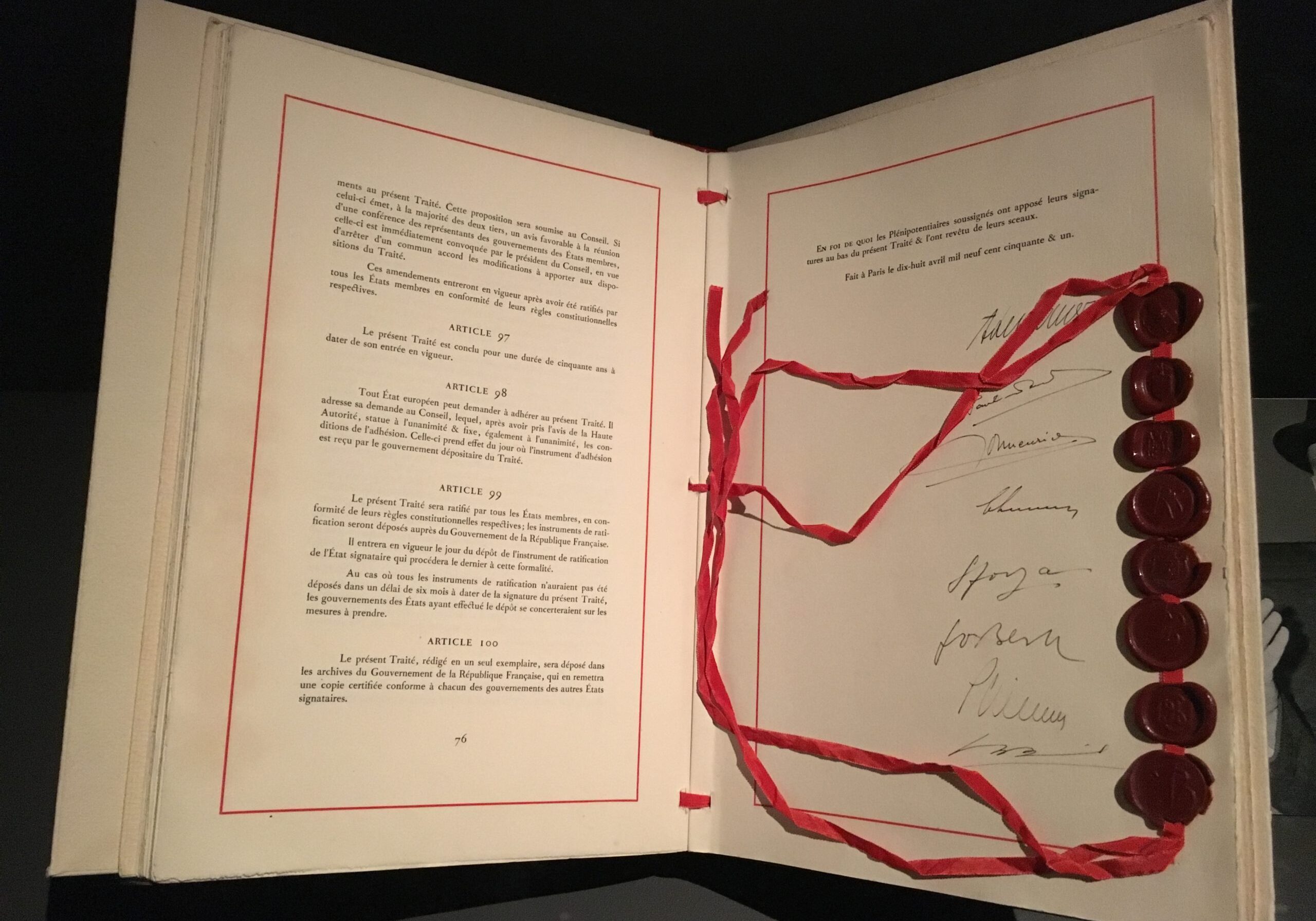
Der EGKS-Vertrag vom 18. April 1951[8]

Insgesamt bietet das Gutachten einen guten Einblick in die Anfänge der Europäischen Union. Neben den völkerrechtlichen Grundlagen lässt sich aus dem Gutachten die erste Absicht des europäischen Projekts als deutsch-französisches Friedenprojekt erkennen, das auf der Zusammenlegung von Produktion beider Länder beruht. Die deutliche Privilegierung Deutschlands und Frankreichs im EGKS-Vertrag wirkt sich dementsprechend auf das Gutachten Moslers aus. Insbesondere die Besetzung der Hohen Behörde und die Abstimmungsmehrheiten im Ministerrat beschäftigen Mosler auch unter diesem Aspekt (S. 36 ff.). Interessant ist zum Beispiel, dass die Hohe Behörde aus jeweils einem Mitglied aus den Benelux-Ländern und Italiens, aber aus zweien aus Deutschland und Frankreich besteht. Das neunte Mitglied, der Präsident der Hohen Behörde, wird von den anderen acht bestimmt (Kooptationsverfahren). Diese spezielle Zusammensetzung und ihr Erhalt nehmen viel Raum im Gutachten ein – Überlegungen, die heute auf den ersten Blick keine Rolle mehr spielen. Tatsächlich dreht sich die seit langem diskutierte Verkleinerung der Kommission aber exakt um dieselben Fragen der „Repräsentation“ der Mitgliedstaaten in der Kommission – auch wenn die Kommission eigentlich von den Mitgliedstaaten unabhängig ist.[9]

Die generelle Problematik der Besetzung der Institutionen ist geblieben. Mosler stellte 1955 fest, dass „[k]ein allgemein anwendbares Prinzip festgelegt“ wurde für die Ernennung der Mitglieder der Hohen Behörde und die Zahl der Abgeordneten pro Mitgliedstaat, stattdessen wurden die Zahlen anhand der „Gründungssituation“ bestimmt (S. 53). Damit müssen diese Zahlen bei jedem Beitritt angepasst oder geändert werden. Dies war dann auch bei den ersten Beitritten 1973 der Fall (s. Art 10 ff. der Akte über die Beitrittsbedingungen und die Anpassungen der Verträge[10]) und hat sich bis heute nicht verändert. Die Zahlen werden jedes Mal neu ausgehandelt und für die bestehenden Mitglieder festgelegt. So wurden auch nach dem Austritt des Vereinigten Königreichs aus der EU die Sitze im Europäischen Parlament neu verteilt.[11] Auch die Debatte über die Bildung von Mehrheiten und Blockierungsminderheiten im Rat (im Gutachten auf S. 62 ff. diskutiert) führte noch in Nizza 2001 zu nächtelangen Diskussionen über Stimmgewichtungen.[12]

Sehr aktuell ist das Gutachten von 1955 auch im Hinblick auf die Kompetenzproblematik zwischen Union und Mitgliedstaaten. Mosler stellt in seinem Gutachten klar, dass der Rat (bzw. die von ihm beauftragte Hohe Behörde) bei Beitrittsverhandlungen in Vertretung der Mitgliedstaaten auftritt, und nicht in Vertretung der Gemeinschaft (S. 87). Im Rückblick bleiben viele Überlegungen Hermann Moslers relevant, auch wenn dies damals keineswegs sofort klar war. Denn die Anfrage an den Völkerrechtler fiel in eine Zeit des europäischen Umbruchs.

Moslers Gutachten in Zeiten des Europäischen Umbruchs

Den EGKS-Ausschuss hatte eine begrenzte, aktuelle Frage beschäftigt: Muss der Pariser Vertrag verändert werden? Doch während Hermann Mosler sich dieser Fragestellung widmete, entstand eine neue Dynamik im europäischen Reformprozess. Das im italienischen Messina gegründete intergouvernementale Spaak-Komitee arbeitete weitreichende Reformideen aus für einen ganz neuen Vertrag. Am 14. Mai 1955 forderte die Gemeinsame Versammlung in ihrer Resolution 35 die Außenminister auf, eine oder mehrere Regierungskonferenzen zu beauftragen mit der Ausarbeitung von Vertragsentwürfen, die für die weitere europäische Integration notwendig seien.[13] So wirkte Hermann Moslers Gutachten fast überholt, als kurz nach dessen Abgabe am 12. Januar 1956 im April des Jahres der Spaak-Bericht[14] veröffentlicht wurde – und in der Folge die Arbeiten an zwei neuen europäischen Verträgen, den Römischen Verträgen begannen.[15] Auch die Gemeinsame Versammlung, Moslers Auftraggeber, hatte nach dem Spaak-Bericht zur Ausarbeitung neuer Verträge aufgerufen.[16]

Doch die Römischen Verträge ersetzten den EGKS-Vertrag nicht, sie ergänzten ihn nur. Art. 232 (1) des EWG-Vertrags hält fest: „Dieser Vertrag ändert nicht die Bestimmungen des Vertrags über die Gründung der Europäischen Gemeinschaft für Kohle und Stahl, …“. Damit behielt auch das Gutachten seine Relevanz. 1967 folgte eine weitere, gewichtige europarechtliche Entwicklung: Die Römischen Verträge wurden mit dem Vertrag über die EGKS im Fusionsvertrag zusammengeführt, und die Europäische Gemeinschaft (EG) entstand. Deshalb waren die ersten Beitritte im Jahr 1973 Beitritte zur Europäischen Gemeinschaft. Doch der EGKS-Vertrag bestand bis zu seinem Auslaufen 2002 weiter. Damit blieben die Überlegungen Moslers in seinem Gutachten auch nach den Römischen Verträgen und der Fusion von Bedeutung, weil Beitritte zur EG immer auch einen Beitritt zum EGKS-Vertrag beinhalteten. Zudem entspricht die Beitrittsklausel in Art 237 des EWG-Vertrags weitestgehend der in Art 98 EGKS-Vertrag.

Aber der EWG-Vertrag beschreibt in Art. 237 ein konkreteres Beitrittsverfahren als bis dahin. Absatz 1 ist noch sinngemäß übernommen aus dem EGKS-Vertrag, doch in Absatz 2 formulieren die Mitgliedstaaten Vorgaben und Zuständigkeiten für den Beitritt: „Die Aufnahmebedingungen und die erforderlich werdenden Anpassungen dieses Vertrags werden durch ein Abkommen zwischen den Mitgliedstaaten und dem antragstellenden Staat geregelt. Das Abkommen bedarf der Ratifizierung durch alle Vertragsstaaten gemäß ihren verfassungsrechtlichen Vorschriften.“ Auffallend ist, dass dieser Absatz den Vorschlägen entspricht, die auch Hermann Mosler in seinem Gutachten gemacht hat. Es wird die Zuständigkeit des Rats geklärt, Vertragsanpassungen werden explizit genannt und das Ratifizierungsverfahren wird erläutert. Diese Formulierungen existieren weiter in art. 49 EUV, bis heute. Auch wenn nicht mehr feststellbar ist, wie sehr die Überlegungen des Institutsdirektors die Europäischen Verträge tatsächlich beeinflusst haben: Sicher ist, dass die Vorschriften für einen Beitritt viele andere Vorgaben überlebt haben. Sie werden angewandt, weiter ergänzt und sind damit immer noch in der Diskussion.

***

Die in diesem Artikel geäußerten Ansichten sind die der Autorin und spiegeln in keiner Weise die Ansichten des Rates der Europäischen Union oder des Europäischen Rates wider.


[1] Jochen Abr. Frowein, Hermann Mosler 70 Jahre, AöR 107 (1982), 630–632 (630).

[2] Ibid.

[3] Frits Groeneveld, Het dubbelgezicht van Michielsgestel, NRC Handelsblad (15.08.1992),            https://web.archive.org/web/20090509221217/http://www.nrc.nl/europa/in_europa/article1517350.ece/Het_dubbelgezicht_van_Michielsgestel (letzter Aufruf 30.12.2022).

[4] https://commons.wikimedia.org/wiki/File:Frits_de_Ner%C3%A9e_tot_Babberich_(1950).jpg

[5] Zu Marga Klompé, Angelika Fliegner in https://www.uni-muenster.de/NiederlandeNet/nl-wissen/personen/margaklompe.shtml (letzter Aufruf 30.12.2022).

[6] https://commons.wikimedia.org/wiki/File:Klomp%C3%A9,_dr._Marga_A._M._-_SFA002001927.jpg

[7] C-26/62, Van Gend en Loos / Administratie der Belastingen, ECLI:EU:C:1963:1, S. 25.

[8] https://commons.wikimedia.org/wiki/File:1951_CECA_ECSC.jpg?uselang=de

[9] Zur Entwicklung der Anzahl von Kommissaren, s. Neill Nugent, Mark Rhinard (Hrsg.), The European Commission, London: Palgrave Macmillan 2015, S. 97 f.

[10] Akte über die Beitrittsbedingungen und die Anpassungen der Verträge, https://eur-lex.europa.eu/legal-content/DE/TXT/PDF/?uri=OJ:L:1972:073:FULL&from=DE (letzter Aufruf 31.12.2022).

[11] Neuverteilung der Sitze im Europäischen Parlament nach dem Brexit, EP Pressemitteilung (31.01.2020), https://www.europarl.europa.eu/news/de/press-room/20200130IPR71407/neuverteilung-der-sitze-im-europaischen-parlament-nach-dem-brexit (letzter Aufruf 31.12.2022).

[12] Zu den Verhandlungen in Nizza siehe Pierre de Boissieu et al. (Hrsg.), National Leaders and the Making of Europe – Key Episodes in the Life of the European Council, London: John Harper Publishing 2015, Kap. 13.

[13] Résolution 35 de l’Assemblée commune de la CECA (Strasbourg, 14 mai 1955)            , https://www.cvce.eu/obj/resolution_35_de_l_assemblee_commune_de_la_ceca_strasbourg_14_mai_1955-fr-02b1c4c5-7302-489b-849b-12dab73a0a5d.html (letzter Aufruf 31.12.2022).

[14] Zum Spaak Bericht: https://www.cvce.eu/collections/unit-content/-/unit/df06517b-babc-451d-baf6-a2d4b19c1c88/22ee1520-b285-4dd4-b69d-a8d807fb4669 (letzter Aufruf 30.12.2022).

[15] Zur Chronologie der Entwicklungen hin zu den Römischen Verträgen: https://www.cvce.eu/collections/unit-content/-/unit/df06517b-babc-451d-baf6-a2d4b19c1c88/ece2ffe3-374f-4d47-82e4-a88bda87a948#4fb59ef7-9500-4448-9dd7-7fb10eea5af2_fr&overlay (letzter Aufruf 31.12.2022).

[16] Résolution 47 de l’Assemblée commune de la CECA (Strasbourg, 11 mai 1956),           https://www.cvce.eu/obj/resolution_47_de_l_assemblee_commune_de_la_ceca_strasbourg_11_mai_1956-fr-32ab1ff4-3ccb-4aaa-88e2-931337d37c71.html (letzter Aufruf 31.12.2022).

English

A Timeless Legal Opinion by Hermann Mosler

On 4 October 1955, Frits de Nerée tot Babberich approached MPIL Director Hermann Mosler requesting an expert opinion. De Nerée, the Secretary-General of the Common Assembly of the Coal and Steel Community (ECSC), the European Parliament’s predecessor, had been asked by the committee on Political Affairs and External Relations to assemble background information on questions surrounding the accession of third States to the ECSC.

The Coal and Steel Community is symbolic of Germany’s reintegration into the European order after the Second World War. It can be argued that the requested opinion on the accession of third States to the ECSC is of similar importance for the European integration of the Max Planck Institute for Comparative Public Law and International Law.

Since its re-foundation in 1949, expert opinions from the Institute had been commissioned primarily by German ministries. In 1955, however, the Institute received two requests from the ECSC – one of which this contribution aims to discuss. These requests reflect the opening of the Institute beyond Germany – and the welcoming of a German research organisation into a European context.

This opening is closely linked to the person of Hermann Mosler. This is no coincidence. The German international lawyer – 43 years old in 1955 – had been the head of the legal department of West Germany´s Foreign Office in its early years and in this capacity had been involved in the drafting of the Schuman plan.[1] From 1954 on, Mosler headed the Max Planck Institute for 26 years and was instrumental in its new outward focus.[2] Until the end of the war, the Institute had referred to international law primarily in order to answer questions concerning Germany. With Mosler, the focus broadened: the Institute now looked more closely at international organisations and examined international relations and the beginning of European integration.

Hermann Mosler was perceived as an unencumbered partner on the international stage and Frits De Nerée’s personal history can serve to illustrate this. Between 1942 and 1944, the Dutch politician had been held by the German occupiers as one of 1400 Dutch hostages in the St. Michielsgestel camp as a bargaining chip to prevent assassinations by the Dutch resistance.[3] Despite this drastic experience, the Dutchman turned to the prominent German international lawyer in 1955 – not to enquire about the German perspective, but to obtain a European expert opinion on a timeless issue.

De Nerée 1950 in Amsterdam[4]

The enlargement of the then ECSC and now the European Union is still a hotly debated issue almost 70 years later. Countries still want to join the European Union. However, the attitude of the EU Member States towards enlargement has changed since. In the early days, it was important to emphasise the Community’s openness in order to allay fears of “the formation of an economic bloc” (p. 6 of Mosler’s expert opinion, tr. LB; all further page references are to Mosler’s opinion). Mosler´s opinion and his correspondence with de Nerée are good examples for this approach.

Today, it is the EU’s enlargement capacity and new accession criteria that dominate the discussion. Article 49 TEU, which regulates accession, now also provides political criteria for accession. At the time when the Secretary General of the Common Assembly of the Coal and Steel Community requested the legal opinion on accession from the Head of the Max Planck Institute for Comparative Public Law and International Law, the questions were much more general: how should new Member States be integrated economically? How would accession be possible to a community as strongly integrated as the ECSC already was by 1955 standards? Similarly open was the question of whether the ECSC Treaty needed to be amended to allow the accession of third States, and if so, to what extent.

Hermann Mosler concentrated his efforts on clarifying these questions, as the correspondence concerning the commissioned report shows. To do so, he contacted Marga Klompé, the rapporteur on the Common Assembly committee which had asked de Nerée to compile materials on the accession question. Marga Klompé, the first female member of the ECSC Common Assembly, came from the region on the Dutch-German border, like her compatriot de Nerée.[5]

Marga Klompé (1956)[6]

The exchange between Mosler and Klompé helped clarify that the expert opinion should also address the question whether it was necessary to distinguish the accession of third states with a coal and steel production (such as Austria) from that of states without such production (such as Denmark). Hermann Mosler further divided his report into several sub-sections discussing accession conditions and logistics. First, he examined the legal requirements for accession and the competences of the institutions as set out in Art. 98 of the Treaty of Paris establishing the ECSC (p. 5 ff.). Then he addressed the question of the effect of accession on the institutions. He assessed whether Treaty changes would be necessary since the Treaty tailored the institutions’ composition to the existing Member States. In this context Mosler discussed questions of balance and staffing of the High Authority (now the Commission), the Consultative Committee (now the European Economic and Social Committee), the Council, and the Common Assembly of the Community (p. 35 ff.). The last part of his report dealt with questions of transitional periods for accession, especially with regard to market entry (p. 71 ff.).

On the Way to a New Legal Order

In his expert opinion, Hermann Mosler relied on international law to support his arguments. He discussed an analogous application of procedures from other international treaties. Today, the transfer of mechanisms from international agreements to the EU seems odd. But the opinion dates from 1955, from before the next major step towards European integration which were the Rome Treaties in 1957. It was this next codification that prompted the European Court of Justice to declare in its Van Gend en Loos judgement that “the Community constitutes a new legal order of international law”[7]. Only then was the sui generis theory really launched, according to which the European Community(ies) represent an entirely new entity not to be appraised according to international law, but according to its own standards. Today, it is self-evident that the EU Treaties are to be interpreted using the methodology specific to EU law, as developed and monitored by the ECJ. Hermann Mosler’s legal opinion, however, reminds us that this has not always been a matter of course and that such a development was not necessarily foreseeable at the time. It is with good reason that the Van Gend en Loos judgement is considered revolutionary. Nevertheless, Mosler’s reflections indicate the high degree of integration of the ECSC at the time and the extent to which Member State sovereignty was affected. The German lawyer was often unable to draw parallels with other treaties under international law, he rather pointed out and justified distinctions from them in his opinion, as when he wrote that unlike for UN conventions, accession by simple notification is not possible (p. 6) and the mechanisms of the GATT are not transferable to the ECSC.

The Treaty of Paris establishing the ECSC, 18 April 1951[8]

Overall, Mosler’s report offers a good insight into the beginnings of what is today the European Union. In addition to the EU’s international law foundation, the legal opinion reveals the initial intention of the European project as a Franco-German peace project based on the pooling of production necessary for war. The fact that the ECSC Treaty clearly privileges France and Germany over the other Member States is also reflected in the report and informs Mosler’s examination of the composition of the High Authority and the voting majorities in the Council (p. 36 ff.). At the time, the High Authority consisted of one member each from the Benelux and Italy and two each from France and Germany. The President of the High Authority was appointed by the other eight members (co-optation procedure). The discussion of this specific composition and its preservation after the accession of new members takes up quite some space in the report – considerations which at first glance seem irrelevant today. However, in reality the issue of the size of the Commission is still very much alive today and revolves around the very same question of Member State representation – despite the fact that the Commission is actually independent of the Member States.[9]

In general, it can be said that the issue of appointments to the institutions remains to this day. Hermann Mosler noted in 1955 that “no generally applicable principle has been laid down” for the appointment of High Authority members and the members of deputies to the Assembly – instead the numbers were determined based on the situation at the founding of the ECSC (p. 53; tr. LB) meaning they would need to be adjusted with each accession. This was then the case for the first accessions in 1973 (see Art. 10 of the Act concerning the Conditions of Accession[10]) and it is still the case today when new members join. The same applied when the United Kingdom left the EU: the seats in the European Parliament were scraped or redistributed; [11] and the Commission was reduced to 27 Commissioners. The discussion of the formation of majorities and blocking minorities in the Council which occupied Mosler (p. 62 ff.) were also the object of night-long discussions as late as 2001 in Nice.[12]

Another issue where the 1955 report is still very topical is that of competence division between the EU and the Member States. For example, Mosler emphasises that the Council acts in representation of the Member States, and not the Community, during accession negotiations (p. 87).

In retrospect, many of Hermann Mosler’s considerations remain relevant, even if this was by no means immediately obvious as the request came at a time of European upheaval.

Mosler‘s legal opinion in times of European upheaval

The ECSC Assembly Committee had been preoccupied with a limited question: does the Paris Treaty need to be changed to allow for accession of third States? But as the German international law scholar Mosler started addressing this question, a new dynamic in the European integration process emerged. The intergovernmental Spaak Committee, founded in Messina, Italy, was working out far-reaching reform ideas for a completely new treaty. On 14 May 1955, the Common Assembly in its Resolution 35 called on the Member States’ foreign ministers in the Council to commission one or multiple intergovernmental conferences to draw up draft treaties necessary to allow for further European integration.[13] After the publication of the Spaak Report in April 1956, work started almost immediately on two new European treaties: the Treaties of Rome.[14] The Joint Assembly, which commissioned Mosler’s report, had also called for the drafting of new treaties after the publication of the Spaak Report.[15] Hermann Mosler’s report to Frits de Nerée had been submitted only three months earlier, on 12 January 1956. With the Spaak report out, it suddenly seemed almost outdated.

In the end, the Rome Treaties did not replace the ECSC Treaty, but rather supplemented it. Art. 232 (1) of the EEC Treaty states: “The provisions of this Treaty shall not affect the provisions of the Treaty establishing the European Coal and Steel Community, …”. They were finally brought together when the Rome Treaties were merged with the ECSC Treaty in the Merger Treaty, and the European Community (EC) was born. The first accessions in 1973 were therefore accessions to the EC. But as the ECSC Treaty continued to exist until 2002 within the Merger Treaty, Hermann Mosler’s 1955 legal opinion on accessions under the ECSC Treaty remained relevant: accessions to the EC always included accession to the ECSC. Moreover, the accession clause in Art. 237 EEC Treaty largely corresponded to that in Art. 98 of the ECSC Treaty.

Since Mosler’s opinion, however, the actual accession of new Member States has made it necessary to clarify the original provision. Art. 237 of the EEC Treaty therefore describes a more concrete accession procedure. Its first paragraph corresponds to the provision in the ECSC Treaty, but its second paragraph formulates requirements for accession and clarifies competences: “The conditions of admission and the amendments to this Treaty necessitated thereby shall be the subject of an agreement between the Member States and the applicant State. Such agreement shall be submitted to all the contracting States for ratification in accordance with their respective constitutional rules.” It is striking that this paragraph also corresponds to the proposals made by Hermann Mosler. The competence of the Council is settled, Treaty adaptations are explicitly mentioned, and the ratification procedure is explained. These formulations continue to exist in Art. 49 TEU. Even though it is no longer possible to determine how much Mosler’s legal opinion truly influenced the European Treaties, it is certain that the provisions the German legal scholar suggested in 1955 for accession have outlived many other provisions. They are being applied, specified, and supplemented – and continue to be discussed today.

***

The views expressed in this article are the author’s and in no way reflect the views of the Council of the European Union or the European Council.

[1] Jochen Abr. Frowein, ‘Hermann Mosler 70 Jahre‘, AöR 107 (1982), 630–32 (630).

[2] Ibid.

[3] Frits Groeneveld, ‘Het dubbelgezicht van Michielsgestel’, NRC Handelsblad (15.08.1992),          https://web.archive.org/web/20090509221217/http://www.nrc.nl/europa/in_europa/article1517350.ece/Het_dubbelgezicht_van_Michielsgestel (last consulted on 19.10.2023).

[4] https://commons.wikimedia.org/wiki/File:Frits_de_Ner%C3%A9e_tot_Babberich_(1950).jpg (last consulted 19.10.2023).

[5] On Marga Klompé, cf. Angelika Fliegner in https://www.uni-muenster.de/NiederlandeNet/nl-wissen/personen/margaklompe.shtml (last consulted 19.10.2023).

[6] https://commons.wikimedia.org/wiki/File:Klomp%C3%A9,_dr._Marga_A._M._-_SFA002001927.jpg (last consulted 19.10.2023).

[7] C-26/62, Van Gend en Loos / Administratie der Belastingen, ECLI:EU:C:1963:1, 12.

[8] https://commons.wikimedia.org/wiki/File:1951_CECA_ECSC.jpg?uselang=de (last consulted 19.10.2023).

[9] On the development of the number of Commissioners, cf. Neill Nugent and Mark Rhinard (eds), The European Commission (London: Palgrave Macmillan 2015), 97 f.

[10] Act concerning the Conditions of Accession and the Adjustments to the Treaties, https://eur-lex.europa.eu/legal-content/EN/TXT/PDF/?uri=OJ:L:1972:073:FULL (last consulted 19.10.2023).

[11] Redistribution of seats in the European Parliament after Brexit, EP Press release (31.01.2020), https://www.europarl.europa.eu/news/en/press-room/20200130IPR71407/redistribution-of-seats-in-the-european-parliament-after-brexit (last consulted 19.10.2023).

[12] On the negotiations in Nice, cf. Pierre de Boissieu et al. (eds), National Leaders and the Making of Europe – Key Episodes in the Life of the European Council (London: John Harper Publishing 2015), Ch. 13.

[13] Résolution 35 de l’Assemblée commune de la CECA (Strasbourg, 14 mai 1955)            , https://www.cvce.eu/obj/resolution_35_de_l_assemblee_commune_de_la_ceca_strasbourg_14_mai_1955-fr-02b1c4c5-7302-489b-849b-12dab73a0a5d.html (last consulted 19.10.2023).

[14] For the chronology of developments towards the Rome Treaties, see https://www.cvce.eu/collections/unit-content/-/unit/df06517b-babc-451d-baf6-a2d4b19c1c88/ece2ffe3-374f-4d47-82e4-a88bda87a948#4fb59ef7-9500-4448-9dd7-7fb10eea5af2_fr&overlay (last consulted 19.10.2023).

[15] Résolution 47 de l’Assemblée commune de la CECA (Strasbourg, 11 mai 1956),           https://www.cvce.eu/obj/resolution_47_de_l_assemblee_commune_de_la_ceca_strasbourg_11_mai_1956-fr-32ab1ff4-3ccb-4aaa-88e2-931337d37c71.html (last consulted 19.10.2023).

Suggested Citation:

Lea Berger, Accession to the European Union, MPIL100.de, DOI: 10.17176/20231109-163501-0
Lizenz: CC BY-NC-SA 4.0 DEED